Review by The Mike.
I hope that someday, when I get old, I'll be able to look back at my life with the wisdom shown by a Stephen King narrator. King has often been able to tell a story from the viewpoint of a grown man looking back on his tumultuous youth - for us movie fans the easy example is when Richard Dreyfus told the story of Stand By Me, though my favorite might be the lead character from his more recent tale Riding the Bullet - and he does it again in Joyland, a 2013 novel that offers just enough of the supernatural and the homicidal to suck a horror fan like me into this fantastic coming-of-age story.
At the center of the book, telling his tale from an older and wiser future, is a man named Devin Jones who went by Dev or Jonesy when he was a 21 year old amusement park employee in the summer of 1973. Jonesy, as I'd like to call him, is an altruistic English student, a virgin who spends his summer pining for the girl he lost while listening to The Doors and reading The Lord of the Rings when he's not working, and someone who just seems to bring out the best in the people around him. Maybe that's because he's the one telling us the story - our narrator does point out that everyone makes their past sound a little more exciting than it really was - but when we like the guy so much we're willing to go along with their version of events.
Jonesy's dramatic tale features plenty of interesting characters - carnies and college kids and a librarian and a sick kid and more - and all of them seem to orbit around his place of employment, the fictional North Carolina amusement park which shares its name with the novel. Joyland isn't a big deal of a place and Jonesy never paints the most glamorous picture of it, but he and King certainly paint it as an environment that would inspire someone to mutter that the place "has character." King is more than willing to pull back some curtains in the entertainment business, providing Jonesy and his co-workers with their own lingo that he dubs "the Talk," but most of the seedy prejudices you might have about carnival workers are absent from this book. King doesn't want us to think of Joyland as a bad place, despite some of the terrible things he creates there.
Those who know Stephen King's work (at this point in his career, is there anyone who doesn't?) might be surprised at how much of the book (which runs a meager 280ish pages in total) is about the carnival life and our lead's self-discovery during his time away from school. King does everything in his power to make Jonesy seem like a good kid - thanks to his narration from thirty years later things like suicidal tendencies and masturbation are brushed off as dumb kid stuff - but it never seems too forced. It's essential to Joyland that the reader truly likes Jonesy, and after finishing the book I don't see how anyone couldn't. He's a sweet character who is slightly one note, but he's never too simple or cliche.
This is a Stephen King book, and you're right to expect something sinister, but it's one of his most restrained supernatural tales. There are hints that some characters possess what his other books might call "a shine" and there's a ghost and there's talk about a few brutal (but not so brutal that you wouldn't see them on a prime time network drama) murders inside the story. Joyland left me wanting a little more in these areas - there are lots of explanations of experiences had by others but not enough direct reader-meets-evil moments to keep a more cynical horror fan's attention - but it's also a bit poetic how King manages to tell a story of a killing and a haunting without losing the book's more life-affirming message.
Joyland worked for me because it's written like so many other great King stories of redemption and growth and hope - themes that often get forgotten when people want to talk about Pennywise the Clown or Randall Flagg or Jack Torrance and his axe - and because it manages to keep a positive twist on death and the macabre. The book is full of death and sadness, but its structure - especially all the asides from the older Jonesy that key us in to some twists down the road - provides plenty of levity that keeps us from
sinking too far into the darker details of the story. It feels like this was all so simple to King - this is one the slightest books I've ever read from him - but I couldn't help being impressed when I realized how invested I was in this character and the events that made his time at Joyland so unforgettable. Joyland isn't an epic of terror like some of his more renowned classics, but it's a reminder that the author can still grab our focus and hold it for as long as he likes.
Showing posts with label Stephen King. Show all posts
March 25, 2014
October 3, 2013
Book Review - Doctor Sleep
Somewhere among my Top 10 favorite movies of all-time (probably later than number 6 but earlier than number 10) sits Frank Capra's slapstick comedy Arsenic and Old Lace. It is a silly film - full of murderers, lunatics, and one seriously confused Cary Grant - but it also contains a line of dialogue that has long stuck in my head as a bold moment of truth. The most murderous member of the film's family, who looks like Boris Karloff, has decided he wants to kill somebody and scolds his assistant (played by Peter Lorre) about what happens when he makes up his mind. Lorre's character, Dr. Einstein, responds with a sigh, saying "Yes, yes, I know. When you make up your mind, you lose your head."
This sticks with me because I think there's a type of personality that is explained by this statement, and I don't think it's just for murderers with the face of Frankenstein's monster. It's a great way to explain addicts. They're people who get attached to the idea of something - whether it be alcohol, drugs, food, or anything else - and who then find themselves trapped by their own desires as they chase what they are focusing on without regard for anything else.
What does this have to do with Doctor Sleep, the sequel to The Shining that Stephen King has finally offered readers? Well, I think that Doctor Sleep is a book by a person who makes up his mind and loses his head (or at least did, back in his drinking days), a book for people who make up their mind and lose their head (people like me, who avoided vices like alcohol and became junkies for horror stories instead), and - most importantly - a book about people who are dangerous because they can make up their mind and lose their head.
First and foremost among these people is Dan Torrance, formerly Danny, the child who survived The Overlook Hotel in the 1970s and who grew up to face everything else life had to offer. King presents Dan first as a defeated child - dealing with the ghosts of The Overlook while trying to get help from his mother and the cook who also "shone" - and then as an adult who hit bottom and had to fight his way back to the top. Dan's bottom - an AA term that King will explain, along with many other loving and accurate descriptions of Big Book meetings - is handled marvelously by the author, and this early book segment (which was suggested, according to King's post-novel notes, by his son Owen) really sets the tone for Dan's journey through the book. It's difficult to see this grown version of Dan Torrance - especially as the book covers more than 30 years of his life - and remember the little boy from The Shining (then again, everything about a 36 years later sequel is a little difficult), yet King does a good job of making Dan a new character while reminding us of his first journey into horror just often enough.
After he bottoms out, we're treated to Dan's search for redemption as he tries to kick his habit and use his gifts in a positive way. This is not an easy task for someone with his afflictions (physical, mental, and supernatural afflictions - if you're counting along at home), but he finds the motivation thanks to some help from his old friend Tony, some new friends in Alcoholics Anonymous, and (most notably) a young girl named Abra.
Little Abra Stone, much like Danny Torrance when he was a child, has the gift of The Shining. We meet Abra as she is born, and some of the book's best segments relay her developing talents as she grows up. Though she's still developing as a teenager when the book hits its dramatic and horrific high points, King shows us enough to make sure we know from an early age (including a bizarre sequence where King connects the infant Abra to the 9/11 attacks) that she has powers that surpass what we've seen from others in the book. Once we see everything Abra can do we realize that Dan and her are a dangerous combination when they get together. King plays upon this, making it easy for readers to get behind these two characters.
The antagonists that Dan and Abra must face are a group of nomadic, soul-sucking, vampire types called The True Knot, a somewhat silly concoction of ageless killers that feed on the essence - or "steam" - of children with Shining powers. The idea of The Knot doesn't really work too well, but is strengthened by its leader, a juicy villainess called Rose the Hat - thanks to her trademark top hat, which becomes one of the book's more enduring visuals. All the side members of the Knot are a little underdeveloped (one character gets a great introduction very early in the book and then becomes second fiddle for the rest of the journey, the rest are caricatures of horror sidekicks) but Rose the Hat is an imposing mental presence who is given a lot of depth by the author. King tries to build up Rose as a devilish talent for evil, yet some of the sequences where he shows us the insides of the True Knot camp and Rose's struggles to lead them are interesting because they make these character seem human. She's ruthless and murderous, but she's also confused and frightened of death - just like we are. Rose the Hat is one character from King's universe that I definitely want to see more of, if only because the author does such a good job of showing both her strengths and weaknesses. There's an argument that could be made about her and Dan being more similar than Dan and Abra are, but that's a much bigger discussion for a different day.
As you can see, there's a lot going on in King's book, and sometimes it felt like he left a storyline behind too easily to tell us something different. For example, I got to a point where I wanted more of Dan's struggles with alcohol and the ghosts of the Overlook, but then King offered descriptions of the Knot and their murderous acts. Or, I got to a point where I wanted to make sense out of Rose the Hat, and just then King dropped a newborn named Abra into the story. It was hard to keep track of where Doctor Sleep was going in the first few chapters, but once King started bringing things together - even tipping his cap to the theory of relativity in a not-so-subtle manner - it became obvious that all of these threads were about to come together.
Things start to clear up around the half way point of the book, but King still has some nice twists up his sleeve as he moves through the final act. Some of the major plot developments are blatantly obvious, but King finds neat ways to surprise us just when we think things are going the other direction. Characters who seem to be gaining power are abruptly killed off, schemes that are spelled out in one manner suddenly become something else, and even a few visitors from The Overlook Hotel make memorable returns. It all adds up to a wildly entertaining, if not ridiculous, final confrontation that wraps the story up rather quickly. It's a chaotic and unpredictable sequence - King even throws in an old man doing a cartwheel (I presume the kitchen sink was busy) - but it features some great moments that help make the ending work pretty well. The whole conflict is probably best summed up by the use of a character from The Shining in one crucial moment - don't worry, I don't dare spoil this one! - which is an out-of-the-blue idea that shouldn't work but had me pumping my fist and cackling like a madman because it was such a fun move by the author.
Doctor Sleep isn't a masterpiece by any means - there's too much going on (including a large number of distracting pop culture references, even for King) and very few moments that match the shock value of King's earlier work - but it works because the minds of the lead characters are opened up to us and because each of the main characters has the ability to surprise us. They are each powerful and unstable characters who could "lose their heads" at any time, which makes Doctor Sleep an interesting and unpredictable new addition to King's universe of horror.
This sticks with me because I think there's a type of personality that is explained by this statement, and I don't think it's just for murderers with the face of Frankenstein's monster. It's a great way to explain addicts. They're people who get attached to the idea of something - whether it be alcohol, drugs, food, or anything else - and who then find themselves trapped by their own desires as they chase what they are focusing on without regard for anything else.
What does this have to do with Doctor Sleep, the sequel to The Shining that Stephen King has finally offered readers? Well, I think that Doctor Sleep is a book by a person who makes up his mind and loses his head (or at least did, back in his drinking days), a book for people who make up their mind and lose their head (people like me, who avoided vices like alcohol and became junkies for horror stories instead), and - most importantly - a book about people who are dangerous because they can make up their mind and lose their head.
First and foremost among these people is Dan Torrance, formerly Danny, the child who survived The Overlook Hotel in the 1970s and who grew up to face everything else life had to offer. King presents Dan first as a defeated child - dealing with the ghosts of The Overlook while trying to get help from his mother and the cook who also "shone" - and then as an adult who hit bottom and had to fight his way back to the top. Dan's bottom - an AA term that King will explain, along with many other loving and accurate descriptions of Big Book meetings - is handled marvelously by the author, and this early book segment (which was suggested, according to King's post-novel notes, by his son Owen) really sets the tone for Dan's journey through the book. It's difficult to see this grown version of Dan Torrance - especially as the book covers more than 30 years of his life - and remember the little boy from The Shining (then again, everything about a 36 years later sequel is a little difficult), yet King does a good job of making Dan a new character while reminding us of his first journey into horror just often enough.
After he bottoms out, we're treated to Dan's search for redemption as he tries to kick his habit and use his gifts in a positive way. This is not an easy task for someone with his afflictions (physical, mental, and supernatural afflictions - if you're counting along at home), but he finds the motivation thanks to some help from his old friend Tony, some new friends in Alcoholics Anonymous, and (most notably) a young girl named Abra.
Little Abra Stone, much like Danny Torrance when he was a child, has the gift of The Shining. We meet Abra as she is born, and some of the book's best segments relay her developing talents as she grows up. Though she's still developing as a teenager when the book hits its dramatic and horrific high points, King shows us enough to make sure we know from an early age (including a bizarre sequence where King connects the infant Abra to the 9/11 attacks) that she has powers that surpass what we've seen from others in the book. Once we see everything Abra can do we realize that Dan and her are a dangerous combination when they get together. King plays upon this, making it easy for readers to get behind these two characters.
The antagonists that Dan and Abra must face are a group of nomadic, soul-sucking, vampire types called The True Knot, a somewhat silly concoction of ageless killers that feed on the essence - or "steam" - of children with Shining powers. The idea of The Knot doesn't really work too well, but is strengthened by its leader, a juicy villainess called Rose the Hat - thanks to her trademark top hat, which becomes one of the book's more enduring visuals. All the side members of the Knot are a little underdeveloped (one character gets a great introduction very early in the book and then becomes second fiddle for the rest of the journey, the rest are caricatures of horror sidekicks) but Rose the Hat is an imposing mental presence who is given a lot of depth by the author. King tries to build up Rose as a devilish talent for evil, yet some of the sequences where he shows us the insides of the True Knot camp and Rose's struggles to lead them are interesting because they make these character seem human. She's ruthless and murderous, but she's also confused and frightened of death - just like we are. Rose the Hat is one character from King's universe that I definitely want to see more of, if only because the author does such a good job of showing both her strengths and weaknesses. There's an argument that could be made about her and Dan being more similar than Dan and Abra are, but that's a much bigger discussion for a different day.
As you can see, there's a lot going on in King's book, and sometimes it felt like he left a storyline behind too easily to tell us something different. For example, I got to a point where I wanted more of Dan's struggles with alcohol and the ghosts of the Overlook, but then King offered descriptions of the Knot and their murderous acts. Or, I got to a point where I wanted to make sense out of Rose the Hat, and just then King dropped a newborn named Abra into the story. It was hard to keep track of where Doctor Sleep was going in the first few chapters, but once King started bringing things together - even tipping his cap to the theory of relativity in a not-so-subtle manner - it became obvious that all of these threads were about to come together.
Things start to clear up around the half way point of the book, but King still has some nice twists up his sleeve as he moves through the final act. Some of the major plot developments are blatantly obvious, but King finds neat ways to surprise us just when we think things are going the other direction. Characters who seem to be gaining power are abruptly killed off, schemes that are spelled out in one manner suddenly become something else, and even a few visitors from The Overlook Hotel make memorable returns. It all adds up to a wildly entertaining, if not ridiculous, final confrontation that wraps the story up rather quickly. It's a chaotic and unpredictable sequence - King even throws in an old man doing a cartwheel (I presume the kitchen sink was busy) - but it features some great moments that help make the ending work pretty well. The whole conflict is probably best summed up by the use of a character from The Shining in one crucial moment - don't worry, I don't dare spoil this one! - which is an out-of-the-blue idea that shouldn't work but had me pumping my fist and cackling like a madman because it was such a fun move by the author.
Doctor Sleep isn't a masterpiece by any means - there's too much going on (including a large number of distracting pop culture references, even for King) and very few moments that match the shock value of King's earlier work - but it works because the minds of the lead characters are opened up to us and because each of the main characters has the ability to surprise us. They are each powerful and unstable characters who could "lose their heads" at any time, which makes Doctor Sleep an interesting and unpredictable new addition to King's universe of horror.
Keywords:
Books,
Horror,
Sequels,
Stephen King,
The Shining
September 27, 2013
Midnight Movie of the Week #195 - The Shining
One of the biggest challenges I face as a guy who writes these kind of things is coming up with something new to say about movies that have been dissected for ages by smarter and wiser folks than I. I get excited when I have the chance to share my love for an obscure and/or less-respected film, because it's easier for me to develop a personal connection with that movie and I feel like I'm accomplishing something when I start to talk about that movie. But, when I start talking about a movie I love that everyone else loves I can sometimes get intimidated. Some movies are so widely loved that it really does feel like there's nothing left to discuss about them.
One such movie is The Shining, which I've wanted to add to the Midnight Movie of the Week pile for ages yet have always been afraid to write about. And when I sat down with the newly released documentary Room 237 this week, I became completely aware of something I'd always assumed to be true - The Shining has been devoured by more intellectuals than any other horror movie ever made.
The good thing is that Room 237 gave me something of a cheat sheet for thinking about The Shining, though the effect it had on me is not the effect that was intended by many of the contributors to that film. For those who are not familiar with the documentary, Room 237 is explained in subtitle as "Being an inquiry into THE SHINING in 9 parts" and is in actuality filmmaker Rodney Ascher's mash-up of theories about Stanley Kubrick's horror film. That sounds like a boring idea for a movie - until you realize just how entertaining some of the crazy theories about The Shining that are floating around out there are.
Ascher took a very simple approach to making his film - he went out and found a few well-spoken, intelligent people who had spent too much time analyzing The Shining, and then he let them share their opinions and theories. The results are as wildly entertaining as Kubrick's film itself, because these commentators turn The Shining into everything from a metaphor for the destruction of native American races (which seems slightly plausible) to an admission that Kubrick helped fake the moon landing (which seems bat-stuff crazy). The ideas expressed within Room 237 can seem very ridiculous, which is exactly why the film becomes so engrossing, even when it seems that the "proof" behind most of the theories is "Kubrick was really smart and there's no way he didn't mean something with every detail." (I don't buy in to that mindset, but I like that people have it.)
While the ideas of the people in Room 237 seem like poppycock, the fact that people actually spent the time thinking about them and have convinced themselves to believe in them is terrifically exciting. As a film nerd I've always believed there's a great value in being able to come up with your own ideas about the movie you're watching, and that any movie that will inspire you to reconsider its reality is a movie worth talking about. And that matters, even if you're wrong about the movie. As a writer, I admit to often pitching my own perceptions of a movie and making assumptions about a film's meaning - that's essentially what film commentary is - and I love the idea that these people are out there obsessing this strongly over a film like The Shining.
Room 237 does not explain The Shining. I want that to be clear and - judging by the disclaimer at the beginning of the film and twice on the DVD packaging - Ascher wants that to be clear too. But Room 237 does perfectly explain why The Shining is such a memorable film. Kubrick turned Stephen King's novel into a nightmare, and the result is the kind of lucid dream that someone might have after they read the novel. It isn't true to the page and it doesn't always make sense and - just like a great nightmare - it leaves itself open to interpretation.
I've seen The Shining dozens of times, and I'm still not sure what my interpretation of the film is. Maybe Jack Torrance was just a crazy guy and the final shot was Kubrick's way of messing with the audience. Maybe it was just a parable about being stuck in purgatory and how parents drag their children to Hell with them. Maybe it's just an excuse to axe Scatman Crothers in the gut. I don't know. But, like the people in Room 237, I love thinking about it. I love talking about it. And now, thanks to Room 237, I'm excited to watch it one more time and to re-live that impossible nightmare known as The Shining.
One such movie is The Shining, which I've wanted to add to the Midnight Movie of the Week pile for ages yet have always been afraid to write about. And when I sat down with the newly released documentary Room 237 this week, I became completely aware of something I'd always assumed to be true - The Shining has been devoured by more intellectuals than any other horror movie ever made.
The good thing is that Room 237 gave me something of a cheat sheet for thinking about The Shining, though the effect it had on me is not the effect that was intended by many of the contributors to that film. For those who are not familiar with the documentary, Room 237 is explained in subtitle as "Being an inquiry into THE SHINING in 9 parts" and is in actuality filmmaker Rodney Ascher's mash-up of theories about Stanley Kubrick's horror film. That sounds like a boring idea for a movie - until you realize just how entertaining some of the crazy theories about The Shining that are floating around out there are.
Ascher took a very simple approach to making his film - he went out and found a few well-spoken, intelligent people who had spent too much time analyzing The Shining, and then he let them share their opinions and theories. The results are as wildly entertaining as Kubrick's film itself, because these commentators turn The Shining into everything from a metaphor for the destruction of native American races (which seems slightly plausible) to an admission that Kubrick helped fake the moon landing (which seems bat-stuff crazy). The ideas expressed within Room 237 can seem very ridiculous, which is exactly why the film becomes so engrossing, even when it seems that the "proof" behind most of the theories is "Kubrick was really smart and there's no way he didn't mean something with every detail." (I don't buy in to that mindset, but I like that people have it.)
While the ideas of the people in Room 237 seem like poppycock, the fact that people actually spent the time thinking about them and have convinced themselves to believe in them is terrifically exciting. As a film nerd I've always believed there's a great value in being able to come up with your own ideas about the movie you're watching, and that any movie that will inspire you to reconsider its reality is a movie worth talking about. And that matters, even if you're wrong about the movie. As a writer, I admit to often pitching my own perceptions of a movie and making assumptions about a film's meaning - that's essentially what film commentary is - and I love the idea that these people are out there obsessing this strongly over a film like The Shining.
Room 237 does not explain The Shining. I want that to be clear and - judging by the disclaimer at the beginning of the film and twice on the DVD packaging - Ascher wants that to be clear too. But Room 237 does perfectly explain why The Shining is such a memorable film. Kubrick turned Stephen King's novel into a nightmare, and the result is the kind of lucid dream that someone might have after they read the novel. It isn't true to the page and it doesn't always make sense and - just like a great nightmare - it leaves itself open to interpretation.
I've seen The Shining dozens of times, and I'm still not sure what my interpretation of the film is. Maybe Jack Torrance was just a crazy guy and the final shot was Kubrick's way of messing with the audience. Maybe it was just a parable about being stuck in purgatory and how parents drag their children to Hell with them. Maybe it's just an excuse to axe Scatman Crothers in the gut. I don't know. But, like the people in Room 237, I love thinking about it. I love talking about it. And now, thanks to Room 237, I'm excited to watch it one more time and to re-live that impossible nightmare known as The Shining.
December 28, 2012
Midnight Movie of the Week #156 - Stephen King's The Night Flier
When the discussion turns to Stephen King's best pieces of writing, The Night Flier is not generally a title that gets mentioned. I've never read the short story, which was originally published in 1988 as part of one of the authors' many anthology books, yet the 1997 film adaptation of the story has long stuck in my mind as a chilling example of King's ability to tell a scary story.
Like many King tales, The Night Flier focuses as much on its flawed human characters as it does on any supernatural force. In the film, cynical tabloid reporter Richard Dees (a character who briefly appeared in King's novel The Dead Zone) sets out to chase down a serial killer who flies around the Northeast in a black Cessna plane and leaves a bloody trail that suggests vampiric tendencies. The cape-wearing aggressor - who goes by the name Dwight Renfield, which is called out as a reference to Dracula - is the instrument that sets everything into motion, but the slimy reporter is what really draws me in to the film.
Dees is played by Miguel Ferrer, an actor who has done reprehensible and narcissistic a few times in films like Robocop and Traffic. The character isn't that much different from what we've seen from him in other films; what is different is that we're stuck with him. This is a man who will manipulate any situation to fit his needs - whether that means defacing a grave or trapping a competing reporter in a closet - but he's also the closest thing to a hero the story will offer us. We've seen King do this before - Jack Torrence from The Shining is probably the most famous example, though Dees' character arc seems closer to that of the lead character in Thinner - and once again he doesn't seem to care whether or not the audience likes the guy who may or may not get eaten by an aviator vampire. King's universe is not a place where a story needs a good guy, and Ferrer is a perfect bit of casting in that universe.
Another thing working in the favor of The Night Flier is the source material. King's prose may be best when the author is allowed to go on for hundreds and hundreds of pages, but it's hard not to argue that the best film adaptations of his work come from some of his shorter tales. The Night Flier is an incredibly simple story, and there's a part of me that's surprised it wasn't whittled down to a half hour for something like Tales from the Crypt. The film gets to 90 minutes by adding a female character who serves partially as a competitor and primarily as a sounding board for Dees' cynical rants, but it doesn't feel like this is just padding to the film. This is a tight horror film that really doesn't waste a moment as it shows us Dees' investigation and leads us toward the answer to his questions.
When The Night Flier answers those questions it makes sure that everyone is glued to the screen. In fact, I might argue that the sequence that starts with Dees finally catching up to the title character is one of the most gripping pieces of horror filmed in the 1990s. The last 20 minutes of the film feature gory moments that make us cringe - including the reveal of some awesome creature effects - and at the same time offers a chilling black-and-white sequence that feels like something out of a moody horror film from decades gone by. Some King stories feel like they lose their way as they try to finish up their story - when they end with a random giant spider, for example - but Night Flier feels like everything wrapped up perfectly in this final sequence.
King may be best known for his epic tales of horror and fantasy, and it's hard to argue against that when it comes to his writing. But when I look at the film version of The Night Flier, despite the fact that it's a film with one interesting character and very little action before things go off the rails in the final act, it seems to me that this is a great example of how King's smaller works can make effective 90 minute horror films. The Night Flier is entertaining because it's such a simple story and because it isn't as ambitious as some King epics. This is the story of one cynical man and one serial killing vampire, which means that the acting of Ferrer and some wonderful special effects are all it really needs to make the film work. It doesn't compare to reading Needful Things, but it's a fun horror flick that should make the author proud.
Like many King tales, The Night Flier focuses as much on its flawed human characters as it does on any supernatural force. In the film, cynical tabloid reporter Richard Dees (a character who briefly appeared in King's novel The Dead Zone) sets out to chase down a serial killer who flies around the Northeast in a black Cessna plane and leaves a bloody trail that suggests vampiric tendencies. The cape-wearing aggressor - who goes by the name Dwight Renfield, which is called out as a reference to Dracula - is the instrument that sets everything into motion, but the slimy reporter is what really draws me in to the film.
Dees is played by Miguel Ferrer, an actor who has done reprehensible and narcissistic a few times in films like Robocop and Traffic. The character isn't that much different from what we've seen from him in other films; what is different is that we're stuck with him. This is a man who will manipulate any situation to fit his needs - whether that means defacing a grave or trapping a competing reporter in a closet - but he's also the closest thing to a hero the story will offer us. We've seen King do this before - Jack Torrence from The Shining is probably the most famous example, though Dees' character arc seems closer to that of the lead character in Thinner - and once again he doesn't seem to care whether or not the audience likes the guy who may or may not get eaten by an aviator vampire. King's universe is not a place where a story needs a good guy, and Ferrer is a perfect bit of casting in that universe.
Another thing working in the favor of The Night Flier is the source material. King's prose may be best when the author is allowed to go on for hundreds and hundreds of pages, but it's hard not to argue that the best film adaptations of his work come from some of his shorter tales. The Night Flier is an incredibly simple story, and there's a part of me that's surprised it wasn't whittled down to a half hour for something like Tales from the Crypt. The film gets to 90 minutes by adding a female character who serves partially as a competitor and primarily as a sounding board for Dees' cynical rants, but it doesn't feel like this is just padding to the film. This is a tight horror film that really doesn't waste a moment as it shows us Dees' investigation and leads us toward the answer to his questions.
When The Night Flier answers those questions it makes sure that everyone is glued to the screen. In fact, I might argue that the sequence that starts with Dees finally catching up to the title character is one of the most gripping pieces of horror filmed in the 1990s. The last 20 minutes of the film feature gory moments that make us cringe - including the reveal of some awesome creature effects - and at the same time offers a chilling black-and-white sequence that feels like something out of a moody horror film from decades gone by. Some King stories feel like they lose their way as they try to finish up their story - when they end with a random giant spider, for example - but Night Flier feels like everything wrapped up perfectly in this final sequence.
King may be best known for his epic tales of horror and fantasy, and it's hard to argue against that when it comes to his writing. But when I look at the film version of The Night Flier, despite the fact that it's a film with one interesting character and very little action before things go off the rails in the final act, it seems to me that this is a great example of how King's smaller works can make effective 90 minute horror films. The Night Flier is entertaining because it's such a simple story and because it isn't as ambitious as some King epics. This is the story of one cynical man and one serial killing vampire, which means that the acting of Ferrer and some wonderful special effects are all it really needs to make the film work. It doesn't compare to reading Needful Things, but it's a fun horror flick that should make the author proud.
Keywords:
1990s,
Horror,
Midnight Movie of the Week,
Stephen King,
Vampires
October 12, 2012
Midnight Movie of the Week #145 - Stephen King's Thinner
Robert John Burke, who I'd previously discounted as merely a second-string Robocop (due to his work as the title character in the disastrous Robocop 3), takes the lead in Thinner, an odd Stephen King adaptation that initially left me a little flustered as I thought about it. I'm not sure if the movie feels like a Tales from the Crypt episode that is stretched out way too long or if it feels like a deeper, more interesting story that is squeezed into 92 minutes. Since King wrote it, I'm assuming the latter is closer to true, because many of his works have suffered when filmmakers attempted to squeeze them onto the big screen. There's a good reason that the most beloved King films are generally adaptations of his shortest stories - because the man writes deep horror tales like no one else in our lifetime has.
I have not had a chance to read Thinner yet, which probably is part of the reason I'm so willing to give this film a pass and actually find myself interested in applauding this piece of horror from the mid-1990s. I'm still a little tentative - this might be one of those Midnight Movie of the Week picks that I look back on later and say "Really?" - but there's an incredible charm to this bizarre story of curses and revenge and wishes gone wrong.
The story is a kind of Monkey's Paw scenario with a twist. Obese lawyer Billy Halleck (Burke) wants to drop some pounds but doesn't want to change his habits, which include snacking, helping mobsters avoid prison, and mocking the pack of gypsies who are passing through his Maine town. Worse, Billy accidentally runs over an old gypsy woman while driving carelessly due to a favor (insert wink here) from his wife, which leads to an angry old gypsy man cursing him to become (you guessed it) thinner. It doesn't sound like a bad deal at first, but the increasing rate at which Billy loses his girth leads to some health concerns (most notably, imminent death) and he is forced to fight back to save his life.
I opened with Burke's name for a reason, which is the fact that the actor takes over the film's lead role and gives a terrifically entertaining performance. The actor attacks the film with a hammy tone that's kind of comedic (now that it's the future, I couldn't help thinking he sounded a bit like Will Arnett), which helps make the character worth watching when you consider who and what the character is. Viewers who are concerned about the morality of their characters might be put off by Billy, who is, to put it nicely, a gluttonous slob who lies, womanizes, and actually kills someone in a hit and run. Despite all that, the only way the film works is if you sympathize, if only a little bit, with this man. (Because, you know, the gypsies have curses. And curses are WRONG.) Burke's approach to the film doesn't necessarily make us like Billy, but it does make him an interesting man to follow, and the combination of the actor's talents and some impressive special effects regarding his body transformation do enough to keep us feeling a little bit of sympathy for him.
Speaking of morality that's flown out the window, Joe Mantegna gives another pulpy performance in a side role as a gangster, and his presence helps the film immensely in the final act. This is another part of the film that reminds us just how little the film cares about the viewer having positive feelings for the characters, as Billy enlists his gangster friend to take out one of the gypsies and kidnap the daughter of his curser (Kari Wuhrer in an early role) to try and get his curse lifted. Meanwhile, the only thing we really learn about the curser - played by Michael Constantine, who is also made-up wonderfully as a 109 year old man with a ugly visage - is that he likes to cackle and refers to Billy mostly as "White Man From Town." Characterization isn't the film's strongest asset, but each of the characters meets a specific purpose within the film's twisted parable. And the performers are having enough fun with the material that I didn't stop too often to notice the lack of depth.
Directed by horror veteran Tom Holland - the man behind Fright Night and Child's Play - Thinner works for me because it offers a very simple tale of unnatural vengeance with some fantastic special effects mixed in. I have to assume that King's story had a little more to it than this film does, but that doesn't take away from the fun I had watching it. Burke and Mantegna's performances alone make Thinner a horror film worth seeing, and the final product is another entertaining, if not slight, adaptation of the author's work.
I have not had a chance to read Thinner yet, which probably is part of the reason I'm so willing to give this film a pass and actually find myself interested in applauding this piece of horror from the mid-1990s. I'm still a little tentative - this might be one of those Midnight Movie of the Week picks that I look back on later and say "Really?" - but there's an incredible charm to this bizarre story of curses and revenge and wishes gone wrong.
The story is a kind of Monkey's Paw scenario with a twist. Obese lawyer Billy Halleck (Burke) wants to drop some pounds but doesn't want to change his habits, which include snacking, helping mobsters avoid prison, and mocking the pack of gypsies who are passing through his Maine town. Worse, Billy accidentally runs over an old gypsy woman while driving carelessly due to a favor (insert wink here) from his wife, which leads to an angry old gypsy man cursing him to become (you guessed it) thinner. It doesn't sound like a bad deal at first, but the increasing rate at which Billy loses his girth leads to some health concerns (most notably, imminent death) and he is forced to fight back to save his life.
I opened with Burke's name for a reason, which is the fact that the actor takes over the film's lead role and gives a terrifically entertaining performance. The actor attacks the film with a hammy tone that's kind of comedic (now that it's the future, I couldn't help thinking he sounded a bit like Will Arnett), which helps make the character worth watching when you consider who and what the character is. Viewers who are concerned about the morality of their characters might be put off by Billy, who is, to put it nicely, a gluttonous slob who lies, womanizes, and actually kills someone in a hit and run. Despite all that, the only way the film works is if you sympathize, if only a little bit, with this man. (Because, you know, the gypsies have curses. And curses are WRONG.) Burke's approach to the film doesn't necessarily make us like Billy, but it does make him an interesting man to follow, and the combination of the actor's talents and some impressive special effects regarding his body transformation do enough to keep us feeling a little bit of sympathy for him.
Speaking of morality that's flown out the window, Joe Mantegna gives another pulpy performance in a side role as a gangster, and his presence helps the film immensely in the final act. This is another part of the film that reminds us just how little the film cares about the viewer having positive feelings for the characters, as Billy enlists his gangster friend to take out one of the gypsies and kidnap the daughter of his curser (Kari Wuhrer in an early role) to try and get his curse lifted. Meanwhile, the only thing we really learn about the curser - played by Michael Constantine, who is also made-up wonderfully as a 109 year old man with a ugly visage - is that he likes to cackle and refers to Billy mostly as "White Man From Town." Characterization isn't the film's strongest asset, but each of the characters meets a specific purpose within the film's twisted parable. And the performers are having enough fun with the material that I didn't stop too often to notice the lack of depth.
Directed by horror veteran Tom Holland - the man behind Fright Night and Child's Play - Thinner works for me because it offers a very simple tale of unnatural vengeance with some fantastic special effects mixed in. I have to assume that King's story had a little more to it than this film does, but that doesn't take away from the fun I had watching it. Burke and Mantegna's performances alone make Thinner a horror film worth seeing, and the final product is another entertaining, if not slight, adaptation of the author's work.
Keywords:
1990s,
Horror,
Midnight Movie of the Week,
Stephen King
October 5, 2012
The Mike's Top 50 Horror Movies Countdown: #11 - The Shining
Previously on the Countdown: Number 50 - Happy Birthday to Me Number 49 - Prince of Darkness Number 48 - House on Haunted Hill Number 47 - The Monster Squad Number 46 - Hellraiser Number 45 - The Fog Number 44 - Creature From the Black Lagoon Number 43 - Zombie Number 42 - Tales from the Crypt Number 41 - Bubba Ho-Tep Number 40 - Phantom of the Paradise Number 39 - Dog Soldiers Number 38 - Pontypool Number 37 - Dark Water Number 36 - Army of Darkness Number 35 - The Legend of Hell House Number 34 - Poltergeist Number 33 - The Abominable Dr. Phibes Number 32 - The Phantom of the Opera Number 31 - The House of the Devil Number 30 - Evil Dead II Number 29 - Dead of Night Number 28 - Carnival of Souls Number 27 - Nosferatu Number 26 - Candyman Number 25 - The Texas Chain Saw Massacre Number 24 - Horror of Dracula Number 23 - The Wicker Man Number 22 - Suspiria Number 21 - The Omen Number 20 - Spider Baby or, The Maddest Story Ever Told Number 19 - Rosemary's Baby Number 18 - The Devil Rides Out Number 17 - The Blob Number 16 - Gremlins Number 15 - Targets Number 14 - Fright Night Number 13 - Frankenstein Number 12 - Alien
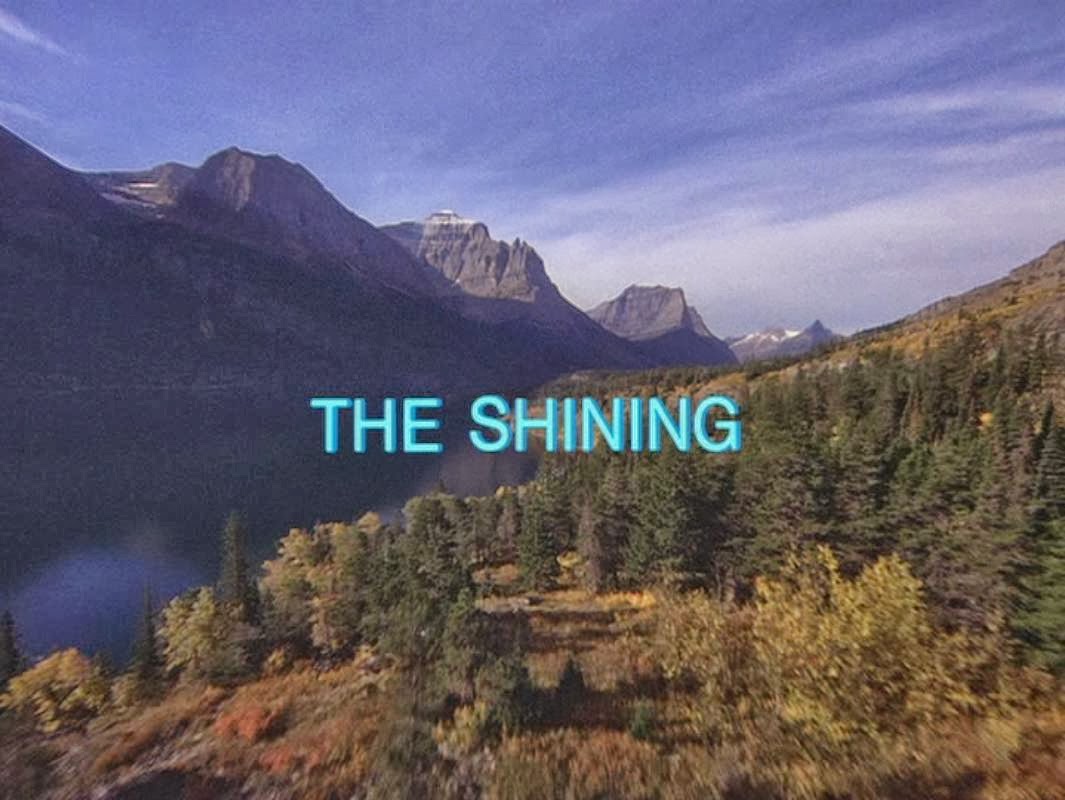
The Shining
(1980, Dir. by Stanley Kubrick.)
Why It's Here:
Stanley Kubrick's adaptation - in the loosest sense of the word - of Stephen King's novel is one of the most unforgettable horror experiences ever filmed. With a great performance from Jack Nicholson leading the way, Kubrick's film is methodical and patient as it lets the strange events occur in the abandoned Overlook Hotel. Innocent events - like a boy riding around the halls on a trike or a writer pecking away at his typewriter - take on new meaning, and the few big scares that follow pack a mammoth punch.
The Moment That Changes Everything:
There are countless shocking moments in Kubrick's film, but the reveal in Room 237 is probably the most unsettling. Partially because no one wants to see rotted old nudity, but also because the build up to what Jack Torrance sees is handled so beautifully. This is a perfect representation of the control Kubrick had over a film.
It Makes a Great Double Feature With:
A more linear horror from the same time period with plenty of chills, Peter Medak's The Changeling lets another Oscar winning actor - Patton's George C. Scott - explore a creepy house and deal with surprising reveals. These two films have strong differences in plot, but there's something I can't put my finger on that draws them together for me. If you want to watch another meticulous horror tale, The Changeling should be right up your alley.
What It Means To Me:
I'm not exactly sure how my sister and I got ahold of a copy of The Shining when we were about 11-12 years old. There's a part of me that thinks my parents actually approved of this, but it's also possible that we just got it out of the poorly guarded VHS cabinet and popped it in the VCR. No matter the why, this movie became our first serious on-screen nightmare - an unhinged portrait of evil that provided something more real than the likes of Clownhouse or Nightmare on Elm Street sequels. It makes no sense sometimes - but what nightmare does? The Shining still manages to fascinate me on every view, and its reputation as one of the most beloved horror films out there is well earned.
Keywords:
Hauntings,
Horror,
Lists,
Stephen King,
Top 50 Horror Countdown
May 3, 2012
Midnight Movie of the Week #122 - The Dead Zone
If you were to ever walk on up to central Iowa and find The Mike's Lair and be like "Hey, The Mike, I was wonderin' who you think the scariest on screen villains ever are", you'd probably hear me mention Greg Stillson. It's a name that gets little publicity in the horror scene - though there are some smartsy, politically knowledged types who throw the example out whenever important elections come up - but it's one that has chilled me for a long, long time.
Greg Stillson, who we'll get to in a minute, is just one of the things to love about The Dead Zone. Whether you prefer books (it's definitely one of my very favorites from Stephen King), TV shows (some give it a bad name, and sometimes it deserved it, but I dig the Anthony Michael Hall led USA Series), or movies (the 1983 adaptation by David Cronenberg that I hope to focus on here) - there's a dose of Dead Zone for just about everyone who loves a bit of telekinesis or "second sight" or whatever you want to call the powers of someone who touches people and sees into their life.
Christopher Walken - only a few years removed from his Oscar win for The Deer Hunter and still looking rather young - stars as Johnny Smith, the ill-fated teacher who enters a coma as a simple young man and wakes up five years later with the power to see. This power - which allows him to see important/tragic events in peoples' lives - could go a lot of ways (Walken himself famously spoofed the role on an episode of Saturday Night Live), but the film narrows them down to three key points. These days, you get the feeling a trilogy would be made out of this material - as the TV series showed, there's plenty that could be done with the character - but this film does a more than adequate job of following King's novel and wedging Johnny's story into 103 minutes.
It would be easy for the film - directed by generally abstract filmmaker David Cronenberg - to have gone off on tangents and radically altered King's story. It worked so well for The Shining, so why not let Cronenberg explode some heads or turn non-vaginal body parts into vaginas? I have to wonder - did Cronenberg have full control over the movie? Was the studio watching over his shoulder? Or did he really like King's story that much that he didn't want to mess with it? Whatever the answer is, I'm pretty glad that he - for the most part - stayed true to the novel. Anyone who watched all six seasons of the TV show - I can't be the only one, can I? - knows that that thing dragged out the most interesting part of the story and never really found closure.
The most interesting part of the story, as I hinted earlier, is Greg Stillson. Though Johnny's first encounters with his powers and his time assisting a local sheriff (Tom Skerrit!) with a murder investigation are interesting enough, there are few characters in horror that provoke the same philosophical dilemma that Greg Stillson does. When we see what Johnny sees - a real world terror the likes of which man has (thankfully) only imagined - Greg Stillson immediately becomes one of the most dangerous men in horror.
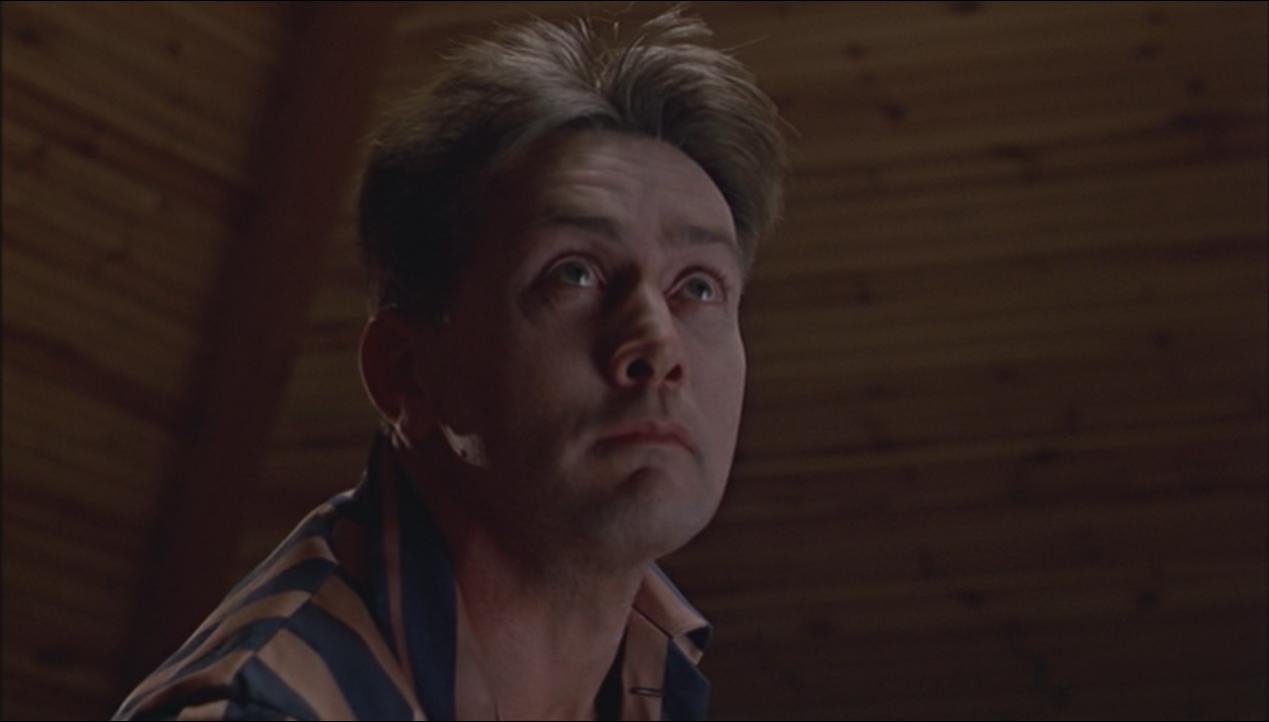
Played with a ton of sleaze by Martin Sheen - who seems to partially channeling his future Mass Effect 2 & 3 character and partially mimicking his son Charlie's future crazy eyes - Greg Stillson represents a man who might tear the world apart. And he's not a dude who might tear the world apart because he's a monster or because he's a physical terror or because he's supernaturally affected. We don't really get a full "why" Greg Stillson might tear the world apart in this movie - the book and show each do more to establish Stillson's mental issues and lust for power/control - but when we see Johnny's vision of Stillson's future there's no questioning that he's more than a bit mad.
With a series of interesting segments (featuring killers, children, politics, and more) and a powerful lead performance by Walken, The Dead Zone is always an interesting story. It's not the most ambitious story that Cronenberg or King ever put together, but it manages to inspire a lot of thought without diving too far into "crazy about science" territory. I suppose reading the book would be a bit more rewarding than watching the film - DON'T TELL ANYONE I JUST SAID THAT - but if you're in a pinch for time you'll surely enjoy The Dead Zone as an intelligent and well-made '80s horror film.
Greg Stillson, who we'll get to in a minute, is just one of the things to love about The Dead Zone. Whether you prefer books (it's definitely one of my very favorites from Stephen King), TV shows (some give it a bad name, and sometimes it deserved it, but I dig the Anthony Michael Hall led USA Series), or movies (the 1983 adaptation by David Cronenberg that I hope to focus on here) - there's a dose of Dead Zone for just about everyone who loves a bit of telekinesis or "second sight" or whatever you want to call the powers of someone who touches people and sees into their life.
Christopher Walken - only a few years removed from his Oscar win for The Deer Hunter and still looking rather young - stars as Johnny Smith, the ill-fated teacher who enters a coma as a simple young man and wakes up five years later with the power to see. This power - which allows him to see important/tragic events in peoples' lives - could go a lot of ways (Walken himself famously spoofed the role on an episode of Saturday Night Live), but the film narrows them down to three key points. These days, you get the feeling a trilogy would be made out of this material - as the TV series showed, there's plenty that could be done with the character - but this film does a more than adequate job of following King's novel and wedging Johnny's story into 103 minutes.
It would be easy for the film - directed by generally abstract filmmaker David Cronenberg - to have gone off on tangents and radically altered King's story. It worked so well for The Shining, so why not let Cronenberg explode some heads or turn non-vaginal body parts into vaginas? I have to wonder - did Cronenberg have full control over the movie? Was the studio watching over his shoulder? Or did he really like King's story that much that he didn't want to mess with it? Whatever the answer is, I'm pretty glad that he - for the most part - stayed true to the novel. Anyone who watched all six seasons of the TV show - I can't be the only one, can I? - knows that that thing dragged out the most interesting part of the story and never really found closure.
The most interesting part of the story, as I hinted earlier, is Greg Stillson. Though Johnny's first encounters with his powers and his time assisting a local sheriff (Tom Skerrit!) with a murder investigation are interesting enough, there are few characters in horror that provoke the same philosophical dilemma that Greg Stillson does. When we see what Johnny sees - a real world terror the likes of which man has (thankfully) only imagined - Greg Stillson immediately becomes one of the most dangerous men in horror.
Played with a ton of sleaze by Martin Sheen - who seems to partially channeling his future Mass Effect 2 & 3 character and partially mimicking his son Charlie's future crazy eyes - Greg Stillson represents a man who might tear the world apart. And he's not a dude who might tear the world apart because he's a monster or because he's a physical terror or because he's supernaturally affected. We don't really get a full "why" Greg Stillson might tear the world apart in this movie - the book and show each do more to establish Stillson's mental issues and lust for power/control - but when we see Johnny's vision of Stillson's future there's no questioning that he's more than a bit mad.
With a series of interesting segments (featuring killers, children, politics, and more) and a powerful lead performance by Walken, The Dead Zone is always an interesting story. It's not the most ambitious story that Cronenberg or King ever put together, but it manages to inspire a lot of thought without diving too far into "crazy about science" territory. I suppose reading the book would be a bit more rewarding than watching the film - DON'T TELL ANYONE I JUST SAID THAT - but if you're in a pinch for time you'll surely enjoy The Dead Zone as an intelligent and well-made '80s horror film.
Keywords:
1980s,
Horror,
Midnight Movie of the Week,
Stephen King
November 1, 2011
The Lists Are In! 42 True Heroes of Horror Later....
I never like to have an idea without getting input from others. And when I decided to share my True Heroes of Horror throughout the month of October, I knew I couldn't possibly honor everyone. Thankfully, there are always Midnight Warriors out there to join the FMWL party. A half dozen of my favorite folks on the interwebs offered up their own lists of their Top 10 Heroes of Horror...and the resulting mega list has me doing my patented fistpumpdance of joy.
First, let's recognize the awesome Midnight Warriors who added to this megalist....
Between the six of them and the one of me, we listed 42 names. And I'm going to share them all with you now. Names will be listed in alphabetical order, and the name of each voter will be shared in parentheses.
Tom Atkins (Morgan), Clive Barker (Marvin), Joe Bob Briggs (The Mike), Poppy Z. Brite (Nicki), Lon Chaney Sr. (The Mike), Roger Corman (Andreas) (Note from The Mike: Corman was officially the last cut from my list; my #11. Kills me to have left him off!), David Cronenberg (Andreas), Fred Dekker (Morgan), Guillermo del Toro (Marvin), Johnny Depp (Christine H.), Robert Englund (Morgan), Adam Green (Nicki), Herschell Gordon Lewis (Nicki), Val Lewton (Andreas), Takashi Miike (Nicki), Morgus the Magnificent (Nicki), Kim Newman (Andreas), Anthony Perkins (Christine H.), Cassandra Peterson (Nicki), Ingrid Pitt (Marvin), Roman Polanski (Andreas), Anne Rice (Christine H.), Susan Hill (Christine H.), Mary Shelley (Christine M.), Bram Stoker (Christine M.), James Whale (Andreas), Edward D. Wood, Jr. (Christine M.), Mary Woronov (Andreas).
That's 28 of our 42 right there, which means 14 folks received more than one vote. Also, the fact that Mary Woronov got on to this list MAKES MY DAY. I <3 Mary Woronov.
Dario Argento (Morgan, Christine H.), Bruce Campbell (The Mike, Morgan), Wes Craven (Morgan, Christine M.), Jamie Lee Curtis (The Mike, Morgan), Alfred Hitchcock (Christine H., Nicki), Boris Karloff (The Mike, Marvin), Christopher Lee (The Mike, Marvin), Bela Lugosi (Christine M., Andreas).
There go 8 more, leaving us with only 6 folks who received votes from three or more of our 7 voters. A lot of my favorites are in here, and I expected many to do better. The Hitchcock thing makes me think too, because I argued with myself for days about whether he should be on my list. Love the guy more than any filmmaker ever, but in the end I didn't feel his impact was specifically "horror". Semantics can trip me up. Anyway, glad to see others voting for him!
First, let's recognize the awesome Midnight Warriors who added to this megalist....
- Morgan from the tubular The Kid in the Hall
- Marvin the Macabre from The Montana Mancave Massacre
- Christine M. from Paracinema Magazine
- Nicki from Hey! Look Behind You (See her full list here!)
- Christine H. from Fascination with Fear (See her full list here!)
- Andreas from Pussy Goes Grrr
Between the six of them and the one of me, we listed 42 names. And I'm going to share them all with you now. Names will be listed in alphabetical order, and the name of each voter will be shared in parentheses.
The following True Heroes of Horror received one vote each....
![]() |
| Clockwise from Top: Atkins, Lewton, Wood, Peterson, Pitt, Perkins. |
That's 28 of our 42 right there, which means 14 folks received more than one vote. Also, the fact that Mary Woronov got on to this list MAKES MY DAY. I <3 Mary Woronov.
The following True Heroes of Horror received two votes each....
![]() |
| From Left to Right: Lugosi, Craven, Hitchcock, Argento |
There go 8 more, leaving us with only 6 folks who received votes from three or more of our 7 voters. A lot of my favorites are in here, and I expected many to do better. The Hitchcock thing makes me think too, because I argued with myself for days about whether he should be on my list. Love the guy more than any filmmaker ever, but in the end I didn't feel his impact was specifically "horror". Semantics can trip me up. Anyway, glad to see others voting for him!
The following True Heroes of Horror received three votes each....
H.P. Lovecraft (Marvin, Christine M., Andreas), Tom Savini (Morgan, Marvin, Nicki.)
An interesting combination if I've ever seen one. And I didn't vote for either of these guys, which makes them the top folks on the list who didn't make my ten. And now, we've got just Four of our 42 folks left to name!
The following True Hero of Horror received 4 votes....
Vincent Price (The Mike, Marvin, Christine M., Christine H.)
I don't know why, but sometimes I get the feeling horror fans don't like Vincent Price any more. Clearly that was not the case among our small sample of voters, as he gets the fourth most mentions of anyone. I'm quite OK with that.
The following True Heroes of Horror received five votes each....
Stephen King (The Mike, Morgan, Marvin, Christine M., Christine H.), George A. Romero (The Mike, Morgan, Christine M., Christine H., Nicki)
For a while, it looked like Stephen King was gonna run away with this thing. The first four lists I received had him on them, as did mine. Then he dropped off to land in this tie for second. It's also worth noting that it's me and the ladies of the internet who love Romero. Why's that worth noting? Because if you read the word "ladies" like Isaac Hayes would say it, then it makes The Mike sound cool.
And then....there was a True Hero of Horror who received six of a possible seven votes....
John Carpenter (The Mike, Marvin, Christine M., Christine H., Nicki, Andreas).
Like I said at the beginning...these results make me FISTPUMPDANCE. John Carpenter might not have been #1 on my list (he might have been too, I was too scaredy-pants to pick a #1) but I have no problem with him winning the vote here. It brings me happy.
As do all the Midnight Warriors out there! I want to thank these fine folks for joining in the October fun, and I sincerely want to thank everyone who's watched the True Heroes of Horror train pass through FMWL this month! I've been truly humbled by all the comments and kind words about the posts, even if I haven't always been the best host and responded to them. Y'all have helped remind me what I love about horror this month, and that's exactly why I keep writing this stuff. Seriously, thank you all so much.
With that, the True Heroes of Horror experiment at FMWL has passed. But for how long? I've had a blast putting my posts together, and it's quite possible I'll bring them back in the future for all the people I left off my list. Ten is such a small number anyway, isn't it?
Until next time, I'm The Mike, and you're all awesome. Don't forget it, because Halloween is only 364 days away!
October 23, 2011
The Mike's True Heroes of Horror (7/10) - Stephen King
In the mainstream pop culture scene of the past thirty years, there probably isn't a bigger horror star than this guy. With 49 novels, numerous short stories and over 130 film or TV productions based on his work, He's pretty much an institution at this point in his career. I almost thought it was too easy to put him on this list, like I would just be stating the obvious to people who already recognize his effects on the genre. Usually, the easiest answer is the right one. Which brings us to...
Stephen King
Who is Stephen King?
A favorite son of the state of Maine, whose real and fictional villages host most of his twisted tales, Stephen King was born in Portland and was educated in the state all the way through his graduation from The University of Maine in 1970. At that point, King had already sold his first short story and had written for the campus newspaper, but it was his inability to quickly earn a teaching job that led him to keep selling stories to magazines. He began working on his first novel in the early part of the '70s, which was published in 1973 and adapted for the screen three years later.
Around the same time is when King developed a drinking problem that affected him for much of the next two decades, which - along with his teenage love of H.P. Lovecraft and EC Comics - also contributed to the dark vision that inhabits his works. Despite personal issues - including an auto accident that severely injured him in the late '90s - King has kept writing for over 40 years, and continues to stay in the spotlight with new works and a column for Entertainment Weekly on pop culture. He remains married to his first wife, Tabitha, and has three children who have all become writers themselves.
King is most known for....
In horror circles, Kings early novels define his impact on the genre quite well. After debuting with Carrie, King created 'Salem's Lot, The Shining, The Stand, and The Dead Zone by the end of the 1970s. Each of these have been adapted for film or TV as well - all but The Stand have more than one adaptation as I write this, and that one's remake is allegedly coming - and each show a common theme that's become a known fact these days: it's really hard to adapt a Stephen King story to the screen and maintain all the detail of his intricate prose.
Other Horror Hits....
I might run out of hosting space on Blogger if I try to list everything King's done that has mattered to horror fans around the world. (I did recently try to sum up my favorite films based on the dude's stuff, however.) Aside from the small sample of novels I listed above, King has produced plenty of horror classics. Names like Pet Sematary, Cujo, Christine and Children of the Corn will be very familiar to fans of horror on the silver screen during the 1980s - which is probably when King's horror popularity peaked, though it hasn't really dropped off much in the ensuing decades. King also got involved with writing and directing for the screen during that decade, though the results are varied from the epic Creepshow to the comically mishandled Maximum Overdrive.
In print, King has remained one of the best selling authors of ever throughout his career, and most of his horror tales dramatically tower over the film versions that are more popular to many. I'm going to talk about my favorite King story and how it affected me shortly, but I would certainly be leaving this article incomplete if I didn't mention one of his most beloved creations, the Dark Tower series of novels that is now seven (going on 8 in 2012) books long. I, out of what must only be ignorance or stupidity, have not yet read these works, but a large consensus of folks around the world will reference King's tales of Roland the Gunslinger as an epic tale that rivals The Lord of the Rings for pure fantasy bliss.
So why's Stephen King here?
I think - no, I hope - that my recounting of the man's career thus far has left little doubt that he has been one of the most iconic folks in horror throughout his career. But the question remains: Why does he matter to me? I'm not here to just repeat popular opinion, after all. If Stephen King's gonna be one of my top ten heroes in horror, I need to make darn sure that I really feel as strongly as most do about King's work.
Growing up in the '80s, I'm not sure I can pinpoint my first interaction with something related to Stephen King. Around the time, he was just someone you knew about by living in the '80s, like Ronald Reagan or Sylvester Stallone or Madonna. If I had to guess, I'd think that the first thing I officially experienced that had King's name on it was Stanley Kubrick's version of The Shining, which was one of the first horror movies my parents made readily available to my sister and I. Of course, King has nearly disowned this film, and when I later read his book, I could tell why. Though Kubrick's film remains one of my very favorite horror films, I will often argue with myself that King's book is in fact a better, deeper, and more meaningful horror story.
I'm pretty certain I can pinpoint my first King reading experience, which I think was his 1994 novel Insomnia. It isn't necessarily regarded as one of King's best works, and it's definitely been surpassed by most of the things I've read by him since, but it certainly painted a new vision of what horror movies could be in my teenage mind. After being transplanted from the small town home of my first 10 years into the family farm in the nearby countryside, reading King's books - which were generally set in small Maine towns that were similar in size to my home town - was a mental escape back into the small town setting that I missed at the time. It wasn't easy to relate to the novel's AARP lead characters, but the dark side of their life and the small town they lived in certainly awakened my active imagination about how evil could lurk everywhere, even in a quiet small town. It would be later that I would really start to understand how King's world works and how many connections to his other works were hidden inside that 800 page book. (The book was set in one of King's favorite fictional towns, Derry, which previously hosted King's revered novel It and later Dreamcatcher.)
That small town evil was expanded upon in one of the next King novels I read, and one that might still be my favorite King story in print. Needful Things was that book, and at the time I thought it was the most awe-inspiring horror tale I'd ever read. Set in King's other infamous fictional town, Castle Rock, the tale of the devilish Leland Gaunt setting up a shop that offers something specific to everyone, as long as they play a prank on another person in town. The long tale focuses on how evil humanity can be when prodded in the right way, and really struck a chord with me. I could picture the events playing out in my old neighborhood, even using real houses in town as the setting for the scenes in my mind, and it really blew my mind. And when I later read The Dead Zone and Cujo - which I also loved - and found out they tied in to the landscape of Castle Rock is when I was kind of in love with King's crazy mind.
As if reading those four novels as a teen wasn't enough to blow my mind, a couple of collections of King's shorter works helped shape my universe as a horror fan too. Different Seasons was most memorable for its less horror-tinged stories - particularly the ones that became The Shawshank Redemption, Apt Pupil, and Stand By Me - and Skeleton Crew introduced me to another horror tale that infected my mind for good: The Mist. Remember the first time you read something and immediately started filming the movie in your brain with your favorite actors? For me that was The Mist. (Yes, I did mentally cast Kurt Russell. No, I was not disappointed by the eventual movie, though I did hate the ending.)
I lost track of reading King somewhere along the way - probably in the middle of the segmented release of The Green Mile in six boring parts - but my occasional revisits to his work have reminded me often that this is certainly someone who knew how to create horror. He's been dismissed at times for writing popular fiction and churning out a few duds along the way, but I don't see any way I could leave King off a list of horror heroes based on his mainstream status. King represents horror to an entire generation, and even some of his less famous works could inspire a young horror fan, just like Insomnia inspired me.
With his interlocking universe full of connections between several of his iconic stories, Stephen King's works did a lot to make me think about the horror genre and how deep a horror story could be, taking me out of the "monsters and slashers" mindset that I had previously known of in horror. I worry that I sometimes get caught up in the film side of his work - which varies in quality - but a reminder of what his best books and stories could do is proof that Stephen King truly is among the best horror has to offer anyone who loves the macabre.
Keywords:
Books,
Lists,
Stephen King,
True Heroes of Horror
October 6, 2011
Midnight Movie of the Week #92 - Carrie
![]() |
| As far as I can tell, I think I managed to keep all the bush out of this shot. If not, sorry to the children! |
When I first decided that I wanted to cover Carrie here at FMWL, I was a little concerned. After all, everyone and their mother has seen Carrie. It's been around for a while, it's kinda a horror classic by one of the best directors ever, and it's the first film to ever be based on a Stephen King book or story or idea or used kleenex. But when I started watching Carrie again, for like the umpteenth time, I immediately began noticing all the reasons that it's so worth talking about again.
![]() |
| Tried to hide the dirty pillows here, too. You're welcome. |
Let's skip back to those evil classmates, who are probably one of the most well-discussed parts of the film - and there are good reasons why. Led by the diabolical Chris Hargensen (played by Nancy Allen, who would become De Palma's number one leading lady over the years), they pretty much represent what can be worst about teenagers. And while we've probably all seen bullies in our days, I'm pretty sure Chris and her cronies - including P.J. Soles and Vinny "John Travlota" Barbino - are among the worst. This leads to one of the film's most fulfilling scenes, the playful "detention" montage in which Chris and the girls who have tortured Carrie get tortured by their no-nonsense gym teacher played by Betty Buckley. Set to a whimsical piece by composer Pino Dinaggio, this little sequence shows us how easy it is to push back against a bully...but it also leads to a bit of backlash from the devilish Chris and her friends.
Speaking of, there can't be more than 10-20 things in the world cooler than the shot where Allen, Travolta, and friends head up to the meat packing plant, with its strange gigantic happy pigs-in-fields-with-woman mural that leads to its pig pens, which look like - well, pig pens. It's just such an amazing little scene (to a biased former child pig farmer), particularly when the Psycho-esque stingers in the musical score accentuate a sledgehammer swingin' Barbarino and Allen cheers him on. You could take that moment and put it into some backwoods Texas Chainsaw Massacre-y film, and it would not feel out of place at all. It's the primal side of Chris Hargensen, and it is awesome.
And then there's the prom sequence, which goes a long way toward proving once again how great Brian De Palma can be without using a single word. The sequence that starts with Carrie White feeling like her dreams have come true and devolves after Chris Hargensen pulls the strings features sweeping music by Dinaggio and great camerawork by cinematographer Mario Tosi; playing out the drama in real-time as we watch the paths of the innocent girl and the devious bully pass for the last time. The sequence is punctuated by another character, Sue Snell (Amy Irving), who has always been the film's most ambiguous cog to me.
The motivation of the characters - aside from Chris, who is just simply demonic - throughout Carrie might be one of the film's biggest weaknesses. One character goes from loving supporter to mocking onlooker in one of the film's key moments, and several other characters - including plenty of adults who are supposed to be looking out for these young people's best interests - seem distant and unreliable. But then there's Sue, who makes the move to have her football star boyfriend Tommy Ross take Carrie to the prom I was already talking about. It took me a long time to figure out just what is going on with Sue's character and whether or not she's part of Carrie's problem or Carrie's solution, but the more I watch the film the more I realize that she's a fantastic twist thrown into the otherwise straight-laced film.
But let's get back to that prom, because I feel its also worth talking about how shocking the final act is. Throughout most of the film, we only see bits an pieces of Carrie's telekinetic power, and there's little to really suggest that she's capable of the kind of things we see play out. The developments that De Palma shows us - doing the best to utilize both sides of the screen are frantic and fast paced and surprising. It's easy to get lost in the coming of age drama and the revenge from the evil Chris parts of the film - not to mention the religious stuff with Carrie's mother, played cruelly by Piper Laurie - that we occasionally lose track of what it really is about Carrie that will turn this movie into a literal blood bath.
There's too much to talk about when it comes to Carrie. The conjunction between King's dramatic approach to horror and De Palma's romantic approach to sleaze is a near perfect one. This might not be the perfect King film or the perfect De Palma film, but it works because it brings most of the two titans' top traits together. When mixed with the great performances - Spacek and Laurie got the pub and the Oscar noms, but literally everyone in the film is spot on - Carrie lives on as one of the great conversation pieces in horror. There's so much to talk about in this film, and I'm glad I've finally taken the time to talk about some of it.
(Oh, and there's also that final scene. Still gets me every time. Even when I know it's coming. At least I don't scream like my sister did when we first saw it.)
Keywords:
1970s,
Brian De Palma,
Horror,
Midnight Movie of the Week,
Stephen King
Subscribe to:
Posts (Atom)