Search this blog and The Mike's favorite blogs!

Showing posts with label Dracula. Show all posts

May 10, 2013

Midnight Movie of the Week #175 - Dracula: Prince of Darkness

Considering what I know now, it's a little bit hard for me to recommend Dracula: Prince of Darkness to people. The first sequel to Horror of Dracula that brought Christopher Lee back to the franchise is slightly infamous due to Lee's attitude toward the production. But I still kind of love the movie, and I don't really feel bad about that. I suppose I could use the term guilty pleasure, but I feel no guilt for disagreeing with one of my favorite actors on this one. Instead, I find that Dracula: Prince of Darkness works as something of a case study into how a film can succeed despite all of the troubling things that happen along its journey through production. 
(RANDOM TANGENT: By the way, I'd never use the term "guilty pleasure" anyway. It's one of those things I wish we could disinvent. There is no reason you should feel guilt over liking a movie. If you take things so seriously that you have guilt....you probably have some personal problems and you might wanna talk to somebody. Life's too short, be happy about movies.)
It's widely documented - I posted an interview in which Lee confirms it just last week - that the star was so disappointed by the film's script that he refused to speak any dialogue in this film. The result is that there are some moments where we briefly forget that this is a Dracula movie, because the film is forced to spend a lot of time on other characters who vary from the very bland to the interesting-only-as-a-caricature. 
One of my favorite theories about sequels that a friend and I once came up with - and this is gonna veer in a non-horror direction, so stay with me - is that you often find sequels scrambling to replace one or two major parts of the first film's success with a larger number of smaller parts. If you saw Moneyball you can think of it as the same thing Brad Pitt did in that movie, but apply it to movies. For example, The Fast and The Furious had Vin Diesel as a criminal/cohort of Paul Walker who was undercover. Vin left and Walker became the criminal, so they had to add Tyrese as a cohort, Cole Hauser as a criminal, and Eva Mendes undercover. Simple math dictates that they needed three people to make up for the loss of Vin Diesel and for the change in Paul Walker's character's profession.
The same thing happened with Dracula: Prince of Darkness, which meant that Hammer Films' stable of writers and director Terence Fisher - who, by the way, does not get enough credit for holding together some standard horror productions and making them better than the sum of the parts (He might have been the Billy Beane of horror movies!) - had to think of new ways to make the movie go. Without Peter Cushing or the Van Helsing character (because you don't just replace Cushing!) and without Dracula as more than a silent force, Fisher and company added some unique characters to the mix and took a step even further away from Bram Stoker's novel.  (That last step might be a negative to some people - Lee particularly - but for the rest of this article I'm going to accept it. Again, life's too short.)
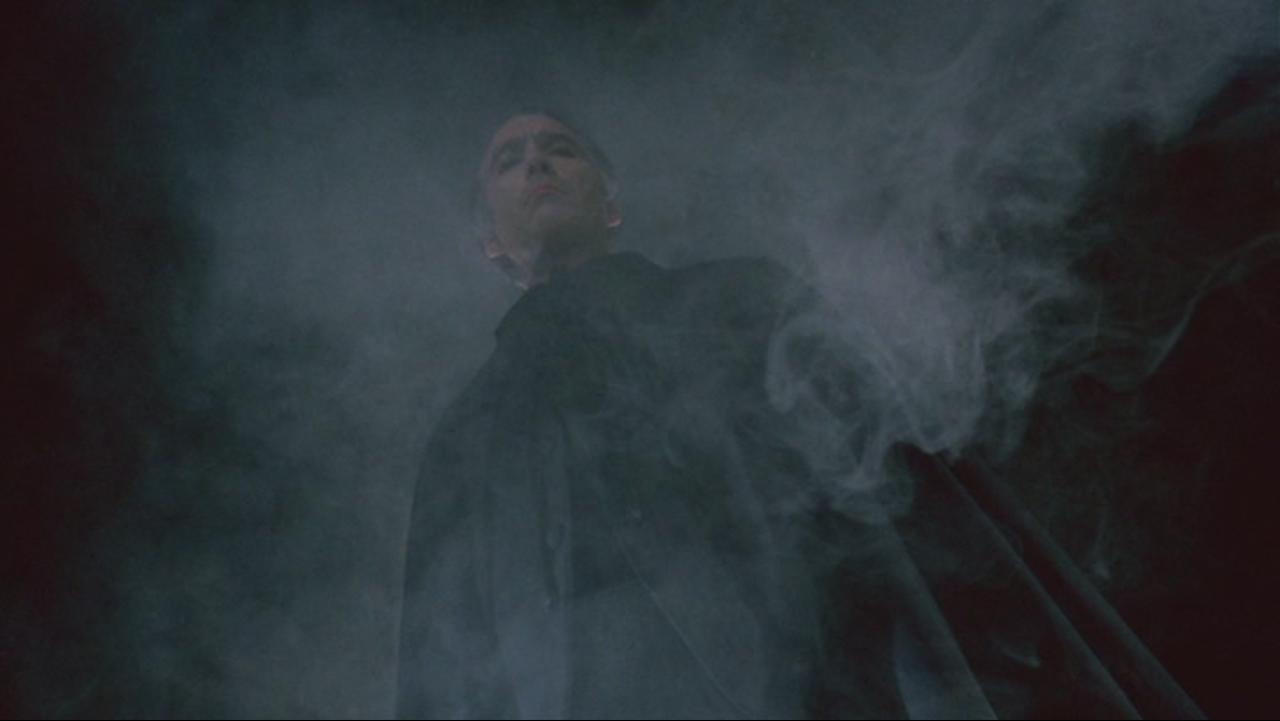
My favorite development in this sequel is the focus on what most vampire mythology refers to as "familiars" - the humans who serve Count Dracula for reasons unknown to most men.  At the front of this development is Klove, played by Philip Latham, a pale and grey-haired servant who maintains Dracula's castle and is responsible for the ritual that allows the previously perished Count to return and terrorize the family that wanders into his home. Klove fascinates me thanks to Latham's quiet and assured performance, and the sequence in which he carries out the blood ritual that resurrects Lee is one of the highlights of the franchise. There's a methodical, religious aspect to the character - watch how the actor pauses and slightly bows before the altar which holds Dracula's ashes - that builds up Dracula's power over the week. If nothing else, Dracula: Prince of Darkness does a really good job of making us recognize the power that Dracula can have over the weak.  (Klove would randomly return two sequels later in Scars of Dracula, but in this version the character is more desperate and pitiful while being played by The Omen's Patrick Troughton.)
Aside from the few familiars involved, this sequel offers a couple of other notable additions to the cast. Barbara Shelley does double duty, spending the first half of the film as an uptight and skeptical member of the group that enters the castle before becoming Dracula's female companion after a mid film bite.  She does a good job of selling both aspects of the character, cementing the fact that this movies is going to spend its time showing Dracula's impact on others. This is also hammered home by co-star Andrew Keir, whose addition to the film as a monk that knows all about Dracula and vampirism is clearly covering for some of the things we'd expect to hear from Van Helsing. It's a one-note character, but Keir's strong presence helps give the film a little more weight.
I probably shouldn't find Dracula: Prince of Darkness to be as interesting as it is, especially when I look at some of the obvious flaws in the production, the biggest of which is being a Dracula movie that doesn't have much Dracula in it. And yet, the way the movie has been put together and the amount of effort that appears to have been expended is somewhat infectious. I gain a lot of respect for everyone involved - even Lee, despite his objections - when I watch this movie because it's such a large challenge to replicate what Horror of Dracula did eight years earlier. Yet you can still see the wheels churning and no one seems to be resting on the name value of the film, and the final result is a vampire tale that is far from perfect but still good looking and a bit charming.

February 28, 2013

Midnight Movie of the Week #165 - Dan Curtis' Dracula

There are more films about Dracula than there are deaths in the Friday the 13th series (OK, I just made that up, but it might be accurate), so it's never a surprise when one pops up and I'm like "Huh, I didn't know that was a thing."  Such was the case when I came across a 1974 adaptation of Dracula by Dark Shadows creator Dan Curtis.  Now, Dark Shadows is one of those things I've never really "got" - I'm too young to have been there when it happened and it seems too Twilighty when I watch it these days - but I do recognize that the man behind this iconic creation had an eye for Gothic romantic horror.  And sometimes, curiosity is all it takes to make me leap.
Curtis' version is billed as a straight adaptation of Bram Stoker's Dracula, but the story written by the legendary Richard Matheson for this TV movie takes a few liberties with the novel - which makes it just like every other adaptation of the tale.  The set up is the same - British real estate dude Jonathan Harker goes to Transylvania, meets Dracula, and leads Dracula to London where he obsesses over Jonathan's bride/fiance (depending on the version) Mina.  The twist, which Curtis admits is clearly a rip off (of himself), as he borrows from the love storyline of his hit series and makes Mina the spitting image of his long lost lover. The result is another melodramatic Dracula tale, but one with a key element that keeps the film edgy.
That edge is provided by the man in the title role, respected gruff guy Jack Palance. It's an odd casting (if nothing else, Palance's head doesn't seem to be the shape of the head I expect from Dracula) and one that immediately piqued my interest in the production.  This isn't like having Christopher Lee or Bela Lugosi in the role, because Palance is all about the intensity and doesn't offer much of the suave romanticism that his counterparts brought the table.  I mean, when Lee snarls at the camera because his brides are being wenches it's cool and scary. When Palance does it it's like he's a cat facing off with a dog and putting on the snarl. It's animalistic and harsh and unsettling - which is cool in its own way, but not at all comforting.  This is not the film where you're going to see Dracula making hungry eyes at his victim like Patrick Swayze would in the role.
Palance works in the role because the film allows him to suck all the air out of the melodrama whenever he needs to.  The performance does an excellent job of keeping the film in horror territory, because we don't get the feeling that Dracula is the tortured, yet soothing, soul that he's often portrayed to be. Palance's Dracula is all about the tortured side of the character, and is presented as an uncaged beast who longs for his love but doesn't proceed with anything less than a determined rage. It is not what we are used to from Dracula, but it is unique and thought provoking.
You could argue that a romantic Dracula movie with an unromantic lead is problematic, and you'd be right to assume that the film has some issues. Curtis' film won't win many prizes for style or substance - though it does send some chills when utilizing Dracula's brides around Jonathan Harker - but there's a unique intrigue to this vision of the Dracula legend. The scowling performance by Palance and the soap opera-esque twist to the plot don't really fit together, but they each work on their own. Perhaps that's the most interesting fact about this Dracula; the fact that it's basically two different Draculas in one place.
The common thread that ties these two Draculas together is the pain that the Count is experiencing, and Curtis' film hammers that point home with no subtlety. A Dracula film that relies this much on misery really only works with the confluence of factors here. Palance looks like a truly beaten Drac throughout much of the film, and we buy into his quest for his lost love because he looks so intense about it, not because he's being the suave version of the character that we're used to seeing. It's an odd idea, and one that's not going to sell the film very well to the romantic horror crowd, but it establishes this film as its own beast. It's not the version that's going to make anyone forget about Lugosi or Lee (and it's occasionally laughable when it goes too far into melodrama) but it feels like an interesting addition to the Dracula mix.

January 25, 2013

Midnight Movie of the Week #160 - The Brides of Dracula

Hammer Films' Dracula tales are most remembered as vehicles for Christopher Lee, so some people are surprised to find out that the first sequel to Horror of Dracula was a film in which Dracula is already dead, Lee did not appear, and a rather unintimidating little man named Baron Meinster serves as the main masculine vampire. Alas, it's all true. The film in question is Hammer's 1960 vampi-rama The Brides of Dracula, in which Peter Cushing picks up where the 1958 film left off and takes on a new vampire threat, none of whom are actually wed to the Count.
The film primarily follows the exploits of a French babe schoolteacher named Marianne (played by Yvonne Monlaur, who is actually the daughter of a Russian count), who takes a job in the Transylvanian countryside (because, well, WHO WOULDN'T?) and ends up spending the night in a big old castle where a mother has her son chained up by the ankle. To some that might seem like a relatively normal night in Transylvania - I've seen enough horror flicks to know someone is always chained up to something - but the pure and innocent Marianne is pretty freaked out and this, along with the craziness of the house's servant (Freda Jackson, getting to play what's basically a female version of Renfield!), convinces Marianne that she's safer booking it through the forest than staying the night.
And that's when the hero returns in the form of Doctor Van Helsing, as played by the great Peter Cushing. Cushing would play "Van Helsing" five times for Hammer, but it's worth noting that he actually portrayed three different characters in five different films in three different timelines during his time with Hammer. This is (at least in Hammer's universe) the only continuation of the "original" version of Cushing asVan Helsing, while his performances in the Dracula films of the 1970s are relatives of this character. So, next time someone tells you Cushing played Van Helsing five times, you can prove them wrong by saying he only played this Van Helsing twice. Isn't that a great feeling?
Now back to the film, which strikes me as one of Hammer's more beautiful vampire films.  The sets are pretty recognizable - we must remember that this was a relatively low budget studio and they did reuse plenty of their sets and props - but there's something vibrant and wonderful about their presentation by director Terence Fisher here.  Horror of Dracula was not a dull film from a visual standpoint, but it seems Fisher attempted to cover up some of this film's issues with a little more color and a lot of feminine beauty. That's not a bad choice for a film that loses Christopher Lee and gains a looker like Monlaur, and the director's vision of the film helps The Brides of Dracula keep our attention for 85 minutes.
The tone of the film loses much of the romanticism that carried Hammer's first Dracula endeavor, and The Brides of Dracula certainly feels like a cheesy spin-off at times. A few of the sequences with the vampire women - especially the ones in which they interact with Jackson's manic servant/familiar - play out in bizarre fashion, yet the film strides forward with confidence that the viewer will forgive some of the sillier bits.  There are moments when the film could have lost me - like an unconventional scene in which Van Helsing deals with a bite wound to his own neck - but there's something to be said for this film's slightly random, slightly nightmarish approach to Marianne and Van Helsing's battle against evil.
The Brides of Dracula isn't the most dramatic vampire film from Hammer studios, and it's not even close to being the most unique.  But it's an abstract vampire tale that hits me as a perfect diversion, a new chapter in a familiar story that enhances my appreciation of Fisher as a filmmaker, Cushing as an actor, and the whole of Hammer Studios as a titan of terror. The Brides of Dracula is widely forgotten, but it deserves more attention for its place in horror history and its unique relationship to the studio's other Dracula films.

July 9, 2012

The Mike's Top 50 Horror Movies Countdown: #24 - Horror of Dracula

Previously on the Countdown: Number 50 - Happy Birthday to Me  Number 49 - Prince of Darkness  Number 48 - House on Haunted Hill  Number 47 - The Monster Squad  Number 46 - Hellraiser  Number 45 - The Fog  Number 44 - Creature From the Black Lagoon  Number 43 - Zombie  Number 42 - Tales from the Crypt  Number 41 - Bubba Ho-Tep  Number 40 - Phantom of the Paradise  Number 39 - Dog Soldiers Number 38 - Pontypool  Number 37 - Dark Water  Number 36 - Army of Darkness Number 35 - The Legend of Hell House  Number 34 - Poltergeist  Number 33 - The Abominable Dr. Phibes  Number 32 - The Phantom of the Opera  Number 31 - The House of the Devil   Number 30 - Evil Dead II  Number 29 - Dead of Night  Number 28 - Carnival of Souls  Number 27 - Nosferatu  Number 26 - Candyman  Number 25 - The Texas Chain Saw Massacre
Horror of Dracula
(1958, Dir. by Terence Fisher.)
Why It's Here:
First of all, can I just have this poster? It's like the awesomest thing I've ever seen, and I don't even speak Dutch.
(OK, stop rolling your eyes.  I was kidding about the Dutch thing.)
Hammer Films are an acquired taste to modern horror audiences.  The studio produced movies that were essentially remakes - though no one ever seems to call them that - of Universal's classic monsters, and struck gold when they cast Christopher Lee as Dracula and Christopher Lee as Van Helsing.  The first film that offers this collaboration, Horror of Dracula, shines despite a meticulous pace and a lack of abrupt shocks.  This is dramatic - heck, even melodramatic - horror, but it's the kind that keeps me riveted.

The Moment That Changes Everything:
Lee's Dracula career - which went through a lot of ups and downs - began with a bang.  The opening seduction of Jonathan Harker by a gorgeous vampiress is ended quickly by the menacing figure of the actor, who stakes (no pun intended) his claim to the role with passion. 

It Makes a Great Double Feature With:
As I mentioned, Lee's tenure as Dracula was not completely positive.  He refused to speak in the first sequel he appeared in, and has lamented many of the later films openly.  But among some of the slips is Freddie Francis' Dracula Has Risen from the Grave, which features the keen eye of one of my favorite directors and my favorite Lee-as-Dracula moment of biting on film.  I wrote a bit about the scene in a guest piece for The Bloodsprayer one time, and I'm still pretty sure that scene makes the movie.

What It Means To Me:
Hammer films have always been the kind of films that inspired me to love horror.  They're not just here to get to the viewer on a visceral level - though they did offer vibrant colors, excellent music, and a lot of blood for their era - they're interested in telling an old fashioned horror tale.  And no film shows just how much they respect horror standards as Horror of Dracula does.  Some see it as slow and bloodless, I see it as horror poetry.

September 9, 2011

Midnight Movie of the Week #88 - Dracula A.D. 1972

When you put about half of my favorite things (like Christopher Lee, Caroline Munro, Hammer Films, and horror movies) together in one place, you're probably going to get my attention.  It's kind of science.  There was a study - I think it was in Norway - that proved unequivocally that putting these things together is 100% guaranteed to get my attention.  I'm not sure if any animals were harmed during the study, but that's not the point.  The point is that Dracula A.D. 1972 is kind of a Mike taunter.
The film opens with what you'd expect from a Hammer Dracula film - Lee battling Peter Cushing in the olden England countryside.  Nevermind the fact that Cushing hadn't appeared as Van Helsing since 1960's Brides of Dracula, nevermind the fact that Lee wasn't even in that movie: that's the image of Hammer horror we all remember.  The catch is that, by 1972, ticket buyers didn't really remember it.  To them, Lee & Cushing as Dracula and Van Helsing was an old thing.  Horror had changed throughout the 1960s thanks to the likes of Psycho, Rosemary's Baby, and Night of the Living Dead, and the only way Hammer could survive was to update.  It's the same thing that happened to the slasher genre in the late '90s.
The slasher genre became self aware when it needed to change, but that wouldn't really work for Dracula in the 1800s.  You can't have Van Helsing start quipping about how people need to watch more movies or how the director created Dracula because of his own nightmares.  So, Dracula A.D. 1972 does the next best thing - it kills off the characters in the opening scenes, then brings them back 100 years later in modern day.
As much as I love the old Hammer, I gotta say that this switch in time and place is probably the second most charming thing about Dracula A.D. 1972.  While I'm being honest, I can admit that some of those Gothic Dracula films run together in my head at times.  On the other hand, Dracula A.D. 1972 stands out like a shiny lighthouse, because it's the one with the '70s and a creepy relative of Drac named Johnny Alucard and that awesome band The Stoneground in an early film party scene.  Amidst all the changes, we still get a bit of the same, as Lee's Dracula is resurrected.  As the old saying goes, "You can't keep a good vampire down".
Cushing also returns to the new century as a descendant of Van Helsing, but the movie brings plenty of fresh blood to the scene too.  Stephanie Beacham (complete with an unfortunate '70s mullet and a slew of chest revealing tops) co-stars as this Van Helsing's granddaughter, who becomes the main target of Alucard and Dracula.  She's joined by a bunch of hip London friends who enjoy things like crashing old peoples' parties and sitting around and being hip.  The group includes a bunch of goofy looking guys, who must be cool to hang out with ladies like Beacham, the fetching Marsha Hunt, and the most charming thing about the film - my dearest beloved Caroline Munro.
The film doesn't capitalize on its new setting entirely, and Hammer could have taken a cue from another horror icon who was adapting to the early '70s scene at the same time.  In making films like The Abominable Dr. Phibes and Theatre of Blood, Vincent Price and the filmmakers he was working with worked to add humor to their films to complement their horror trademarks.  Despite A.D. 1972's updated setting and the silly party scene at the beginning, the film is very direct and straight-laced throughout the rest of the film, which leaves the final product a lot closer to the outdated Hammer films it wanted to escape from.  The result is still pleasing to a fan of those films, but it's easy to see why just moving the film to modern times wasn't enough to rejuvenate Hammer Films.
There's still a lot to like about Dracula A.D. 1972, despite the missed opportunity in tone and a few lulls in the action.  The film still manages to provide a lot of fun scenes and new twists on the Dracula movie, and the mixture of veteran performers Lee and Cushing and young stars and starlets provides some unique scenes that we wouldn't expect from other Hammer films. I think 1970's Scars of Dracula did a slightly better job of integrating young characters into the Hammer world, but that's not the point.  If you've got the choice between this one or Hammer's follow up - The Satanic Rites of Dracula - which replaces the modern young folks with a modern Satanic cult - I have the feeling you're gonna pick Dracula A.D. 1972 every time.
If you blow up this picture, you'll be creeped out by the hairy nerdy glasses guy trying to sneak dance with Caroline Munro on the left side of the frame.
Maybe I like Dracula A.D. 1972 more than I should, but I dig the heck out of it's idea to merge London's wild scene of the early '70s and Hammer's classic tales of Dracula and Van Helsing.  With the likes of Munro and the music of The Stoneground helping out, Dracula A.D. 1972 continues to be an interesting statement on where Hammer was going at the end of their first reign of terror (which ended a few films later with To The Devil, A Daugher....) and a cheesy distraction for fans of its era's style.

May 23, 2011

The Universal Horror Experience - Dracula's Daughter

Man, Dracula's Daughter is something else.  For starters, it's one of the Universal Horror sequels that I - despite my love for all things monstrous - had never gotten around to seeing.  Until last night, that is.  And now that I have seen it, I'm pretty sure it's one of the more unique horror sequels ever made.
It was merely 1936 when Dracula's Daughter was released, as Universal was riding the wave of success from Dracula and Frankenstein in 1931 and 1935's Bride of Frankenstein had established just how profitable a sequel could be to the studio.  I guess the feminine side of Bride was an inspiration to the people behind Dracula's Daughter, but the tone of the two films couldn't be more different.  That's not a big surprise, because Dracula and Frankenstein were different in tone as well, but the gap between their sequels is gigantic.
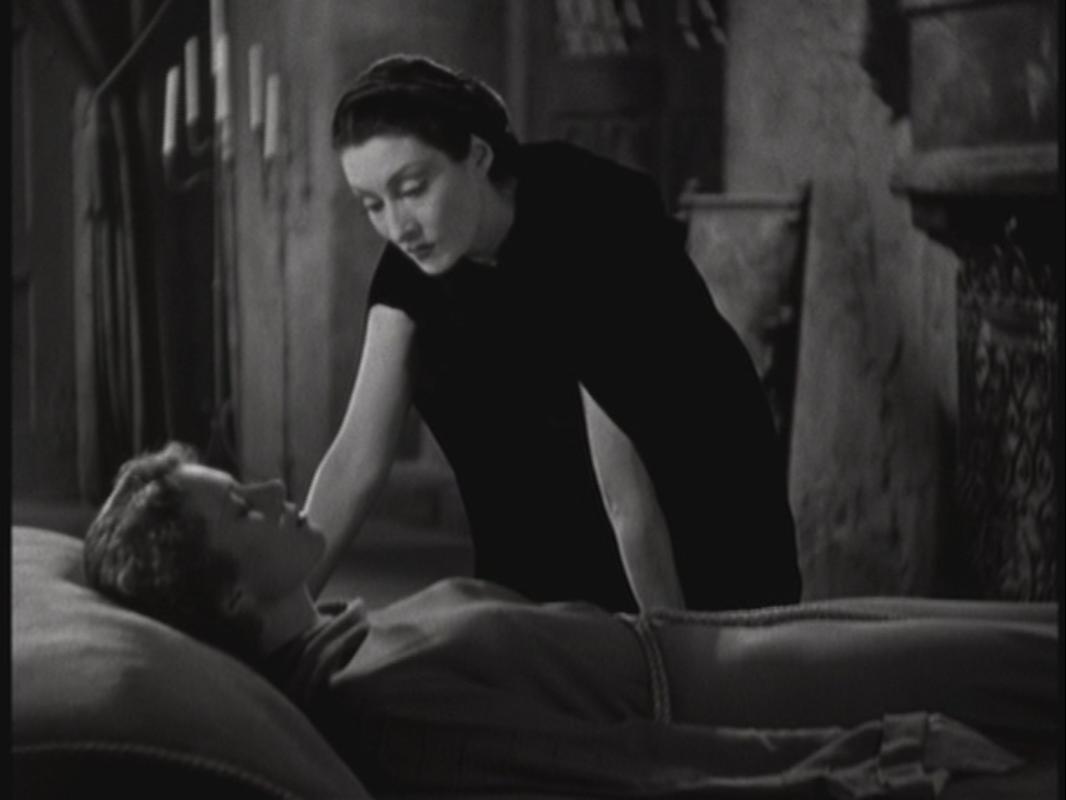
Actually, Dracula's Daughter might be the darkest movie of its era that I've seen.  Gloria Holden - the grandmother of The Mist and The Walking Dead co-star Laurie Holden - seems to float around the screen as the title character. Holden also uses her distant stare and rounded eyebrows to make Countess Marya Zaleska a hypnotic femme fatale, and the power of her presence in the film can't be denied.  The performance has certainly been an influential one in the horror scene, and is referenced as an inspiration for future female vampires like the ones created by author Anne Rice.
But, if we want to get to the part of Dracula's Daughter that involves Ms. Holden, we need to start at the beginning and the film's kind of genius set up.  In the opening scene we see the aftermath of the unseen finale of Dracula, as Professor Von Helsing - played again by Edward Van Sloan - deals with the police after putting a stake through the heart of Count Dracula (played here by a wax version of Bela Lugosi).  Watching the two patrolmen try to fathom why this distinguished old man has just put a stake through someone's heart is actually a pretty humorous opening, but it also leads into a unique discussion of the vampire curse.  As Von Helsing (seriously, that Von sooooo bugs me) puts it, you can't be charged with murder when someone's been dead for 500 years.  I think he has a point
The old doctor's pleas lead to the involvement of a psychiatrist/former student played by Otto Kruger, but also leads Countess Zaleska to London, where she uses her hypno-skills to acquire her father's corpse.  She promptly burns the corpse, because she's convinced that doing so will end her vampire curse.  Unlike her Romanian ancestor, the younger Dracula doesn't feel very comfortable in her role as a child of the night.  She still avoids wine and she still craves blood, but the diabolical edge of her father is replaced with a sad indifference in her eyes.  It's like she knows that what she is simply can not exist peacefully in our world.
Speaking of "what she is", I'd be foolish not to mention the sexual implications of the film.  Despite the strict regulations on films of the era, Dracula's Daughter is filled to the brim with some shockingly obvious lesbian undertones.  The Countess primarily sets her sights on female victims, and her intimate gaze at these women had to be a bit risque for the era.  A mid-film scene in which she offers to paint a young girl from the shoulders up shows a shocking amount of skin for the era, and the studio was very hesitant to approve the scene due to its homosexual subtext.  By today's standards it's impossible to miss the gaga-eyes Holden gives these young women - after all, I am the guy who used to think Mac and Blaine in Predator might have been gay lovers - and it's interesting to me that many people of the era weren't taken aback at all by the Countess' interactions with her victims. Wikipedia even cites that one critic advised viewers to "Be sure to bring the kiddies"!  (And if it's on Wikipedia it MUST be true!
I'm not really sure how anyone of the era would assume this was family fare anyway, because Dracula's Daughter features a lot of dark and foggy scenes that create more tension than anything in the Dracula film that preceded it.  Holden's dark performance is also accentuated by her creepy henchman Sandor (played by Irving Pichel), who lurks in shadows like an imposing mixture of Boris Karloff and Humphrey Bogart.  His relationship with the Countess is also an interesting one, as he seems to understand both her disdain for her condition and her unstoppable need to feed upon the innocent. 
I'm talking up Dracula's Daughter pretty well, though I'm not sure I really felt I liked the film that much.  It suffers from pacing problems that are similar to Lugosi's Dracula, and the connecting scenes that don't involve Holden or Pichel often fall pretty flat.  But Dracula's Daughter is at least a thought-provoking sequel that is its own movie, and it earned my respect quickly by being so willing to take chances that buck what viewers would expect from it.  Though seventy-five years have passed since its release, Dracula's Daughter still feels like it's kind of a rebel in the Universal Horror scene - and I respect that greatly.

October 28, 2010

Midnight Movie of the Week #43 - Horror of Dracula

It's often hard to see that Horror of Dracula, which seems tame by today's standards, is a film to which almost all of the horror traditions we believe in can be traced back to.  Blood?  Got it.  Breasts? Not quite bare, but on display.  A silent killer?  Not quite, but Count Dracula only speaks 13 lines - all to one character - and Christopher Lee would go completely silent in the next Dracula film he did (Dracula - Prince of Darkness).  These days it's hard to believe that this film was once deemed violent and controversial, considering everything that's happened to the horror genre from Psycho to Saw.  (This is the only time I'll ever connect those movies, I swear!)  But it's true; I can't think of a single horror film pre-Psycho that resembles the future of horror like Horror of Dracula does.
Still, the great thing about Hammer's first take on Dracula is that, at its core, it understands the allure of Count Dracula.  This wasn't hard to miss at the time - Universal's version that starred Bela Lugosi was STILL playing in some theaters (despite being 27 years old), and another Dracula film - The Return of Dracula, starring Francis Lederer - would open a month before Hammer's film had its premiere in Milwaukee, Wisconsin.  (If you had asked me to guess where Hammer's first Dracula film premiered earlier in my days, I'd have never, ever guessed Milwaukee.)  That American black-and-white film was quickly forgotten by audiences - even after the producers added a color shot that mimicked the stakings in Horror of Dracula.
Horror of Dracula marks the first time that Peter Cushing and Christopher Lee would appear as the top-billed stars in a film together, and both did their part to keep the film relevant.  Though the role of Van Helsing had been played before and would be played again, I've always felt that Cushing does to it what Karloff did to Frankenstein's monster.  This is the textbook example of a vampire expert, and this Van Helsing even makes comments about the similarity between vampirism and addiction to drugs, which would become a hot button issue in vampire films of the '80s and '90s.  A lot of credit has to go to the writing by Hammer's unsung hero Jimmy Sangster, but Cushing doesn't need much help to make the role his own.
Plus, we've got Lee.  His turn as Dracula, though marred by difficult contact lenses that at times rendered him blind on set, is the rare new take on a classic character that soars.  His physical presence - at 6'5" tall - is key to the film, as he's certainly more imposing than that Hungarian fellow who never drinks wine.  This is another bit of flash forward to the future of horror - in which killers got bigger and slower and quieter - but Lee's size is not the only thing that makes his Dracula effective.  The man shows a keen ability to play both the human Count and the inhuman Dracula without speaking for the film's final two acts.  There's a startling - and effective - disconnect between the proper Count he plays at the beginning of the film and the snarling beast he becomes when threatened.  Lee became Dracula just as Cushing became Van Helsing, though Lugosi's staying power has kept both portrayals fresh.  (I'll never be able to give up on the "Creatures of the night..." line from Bela.)
There's a lot more to love about the cast of Horror of Dracula.  Michael "Alfred Pennyworth" Gough is excellent as the skeptical Arthur Homewood who slowly comes to believe Van Helsing's tales.  More exciting are the main female roles, including Virginia Madsen lookalike Melissa Stribling as Lucy, and Carol Marsh (who might give the film's best performance) as the doomed Mina Harker (one of the film's biggest steps away from the source material).  I'd be ashamed to not mention Valerie Gaunt as Dracula's undead bride in the opening scenes.  With her pale flesh and revealing dress, she is an unforgettable part of the film's hook.  From the first time we see her trying to seduce - and then feed on - Jonathan Harker, we know this film is a different kind of monster than any Dracula that Universal produced.  The sexual aspect of the film would carry on throughout, leading up to a meeting between Dracula and Lucy that ever-so-slightly implies rape. 
The staged nature of the production is directed well by Terence Fisher, with a deliberate pace that seems to fill the runtime with as much information as was possible.  Composer James Bernard sets the tone - literally - for Hammer's series of horrors with his haunting and occasionally aggressive score, and the sets are luscious and memorable - despite the fact that Hammer nearly fired the set designer for being too different from Universal's film.  The combined efforts of those involved - plus some fine costumes and effects - make the 81 minute film feel like an epic production on a grand scale.
And then there's the gore.  Though it's incredibly minimal by today's standards, the amount of blood shown on screen - usually dripping from mouths or necks, and at one point spurting from a chest - was extremely unheard of for the cinema of 1958.  Horror of Dracula had to fight cuts by censors, and a few moments when the film fades to black remind us that the film probably wanted to show even more than it did.
When summing all these things up, Horror of Dracula becomes the prototypical Hammer horror in my eyes.  The film, like so many that would follow it, bridges the gap perfectly between the romantic side of horror that prevailed in the 1930s and the disturbing and violent films that would follow.  We've lost that balance over time, as society becomes less willing to accept stories which don't relate to their own world (leading to things like Dracula 2000, for example), but when I look back at the greatest moments in horror history, Horror of Dracula stands tall.  We don't always notice the impact that this film - which seemed to just be a remake of a classic property at the time - has had on the landscape of horror, but we should.  Horror of Dracula is as relevant (and also as fantastic) as a horror film can be.
-----------------------------------------------------------------------
And that, my good Midnight Warriors, is exactly where I want Hammer Films Month at FMWL to end.  It's been a heck of a journey, and I wish I could cover more, but there's no better place to stop then at the top.  Fear not, because I have a couple of special posts lined up for the weekend that will surely give you some Halloween treats, and I'm sure our friends at Hammer will be back on FMWL from time to time.  Until then, it's been an honor to share some of their work with you all, and I hope you've enjoyed!